
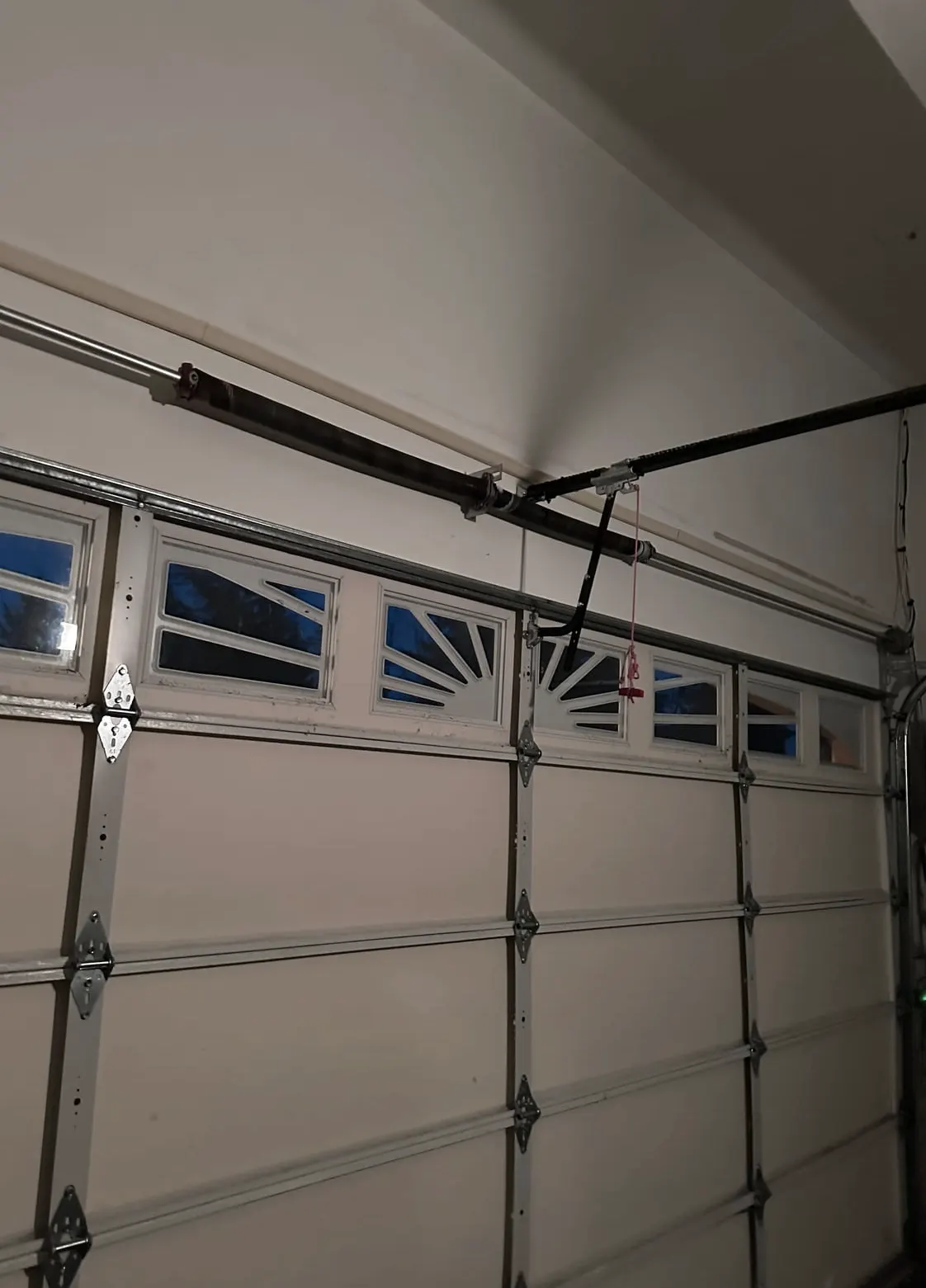
The One-Sentence Rule
If the noise is a rhythmic squeak or grind that happens every time the door moves, it's probably a roller; if the door looks crooked, sags on one side, or makes a sudden pop or bang, it's probably a cable. That's the quick rule. Now for the exceptions, because garage doors rarely follow a script.
A roller that's completely seized can also make a loud bang when it finally breaks free and slams into the track. And a cable that's fraying slowly, strand by strand, can be almost silent right up until the moment it isn't. So the sound alone isn't proof. You have to look, too.
What a Worn Roller Actually Sounds Like
Worn rollers announce themselves gradually. You'll hear a squeak or a grinding noise that repeats in a pattern as the door travels up or down — basically once per rotation of the wheel. Over time that turns into a harsher scraping sound, especially if the roller has a flat spot or the bearing inside has worn out.
Visually, look at the rollers where they sit in the track. Nylon rollers should look round and smooth. If you see cracking, chunks missing, or a roller that looks oval instead of round, it's worn. Steel rollers with exposed bearings will often show rust, which is common here given the humidity and the salt air if you're closer to the coast. Rust on a roller bearing is a near guarantee of noise and eventual seizing.
Why Rollers Wear Faster in This Climate
Humidity and afternoon downpours mean moisture gets into roller bearings even when the door looks fine from the outside. That moisture causes rust, and rust causes friction, and friction is what you're hearing. Houses that go through repeated wet-dry cycles also see more swelling in the door panels themselves, which puts extra side pressure on the rollers as they travel through the track — another reason they wear out faster here than in a dry climate.
What a Frayed Cable Actually Looks Like
Cables are the steel cords connected to the bottom brackets of the door, running up to the drum near the spring. They're under serious tension, and when they fail, they usually don't give much warning.
Here's what to look for, without touching anything:
- Visible fraying: thin strands of wire sticking out from the main cable, like a frayed shoelace. This is the clearest sign and means replacement is overdue.
- A door that hangs crooked: one side higher than the other when closed, or a visible gap on one side.
- A loose cable that looks slack instead of taut when the door is down.
- Rust at the cable or drum, which weakens the strands from the inside even before fraying is visible.
If you hear a loud pop or bang and the door suddenly won't open, or opens unevenly and drops on one side, that's very often a cable that's already given out. This is also one of the few garage door problems that can cause real injury, since a snapped cable under tension can whip or let the door fall unexpectedly. If that happens, don't try to force the door open or closed — leave it alone and get it looked at.
Why Cables Are a Bigger Deal During Storm Season
Garage doors in this part of Florida are built or reinforced to handle wind-load requirements for hurricane season, and the cables are part of that system. A door with a frayed or rusted cable isn't holding up its end of that wind-load design, which matters a lot more here than in places that don't see tropical storms. A cable that's marginal in October might not survive the pressure swings of a storm system pushing through in the months ahead.
A Quick Way to Settle the Argument
Stand to the side (not directly under the door) and watch one full open-and-close cycle. Ask these questions:
- Does the door move smoothly on both sides, or does one side lag or jerk?
- Is the noise constant and rhythmic (roller) or a one-time pop or grind (cable)?
- Does the door look level when closed, or is one corner higher than the other?
- Can you see fraying, rust, or slack in either cable?
If the door moves evenly and the sound is a repeating squeak, it's almost certainly rollers — an easier and cheaper fix. If the door is uneven, slow on one side, or you can see any fraying at all, treat it as a cable issue and stop using the opener until it's checked.
When to Call Ebro Door & Opener
If you're seeing fraying, rust on the cables, or a door that hangs crooked, that's a job for Garage Door Cable Repair — cables are under high tension and aren't a safe DIY replacement. If the issue is rollers that squeak, stick, or look worn but the door still tracks evenly, a Garage Door Maintenance & Tune-Up visit can replace the rollers, check the tension on both cables, and catch rust or wear before it turns into a snapped cable or an off-track door down the road.
Either way, we'll tell you straight which one it actually is, show you what we're seeing, and only replace what needs replacing.
If your garage door in Ebro, FL is squeaking, hanging crooked, or just not sitting right, give Ebro Door & Opener a call and we'll sort out the cable from the roller for you.