
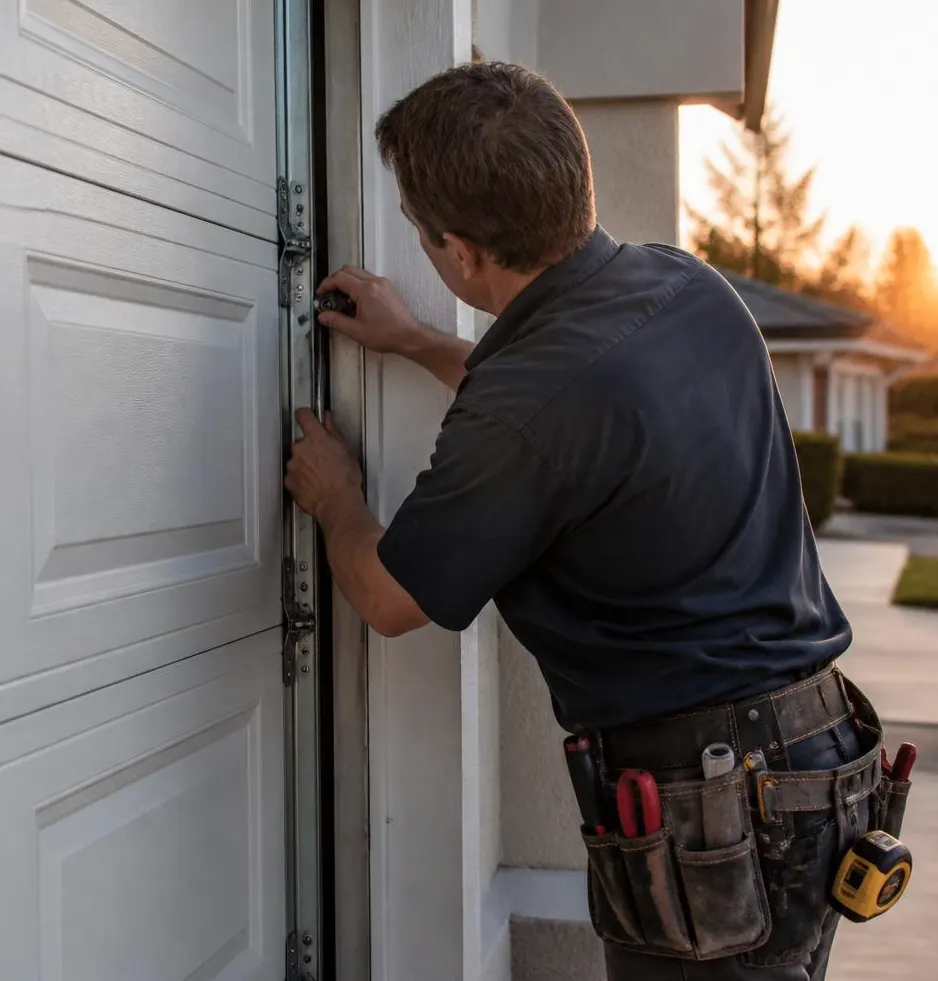
The Mistake Almost Everyone Makes First
Most homeowners reach for a can of WD-40 the moment their garage door starts squeaking. It's tempting because it's already sitting on a shelf, it's cheap, and the name practically promises a fix. The problem is that WD-40 is a solvent and water-displacer, not a lubricant. It cleans off old grease and grime, which makes the noise quiet down for a day or two, but it also strips away whatever protection was there and leaves metal parts drier than before. In a climate like Ebro's, where humidity sits high most of the year and afternoon downpours are routine from spring through hurricane season, that dry metal starts picking up surface rust within days. You end up spraying more often, chasing a squeak that keeps coming back worse.
Why Local Weather Changes the Job
Garage door hardware in Washington County and along the coast toward Santa Rosa Beach and Panama City Beach deals with more than typical wear. Salt air accelerates corrosion on springs, hinges, and track bolts. Humidity swings make wood and even some steel door panels swell and contract, which puts extra strain on rollers and hinges as they bind slightly in the tracks. And since local doors are often built or retrofitted to meet wind-load expectations for storm season, the springs and cables are already working harder than a door in a drier climate. Good lubrication isn't cosmetic here, it's part of keeping the hardware from failing early.
Tools and Products You'll Need
- A garage door lubricant labeled specifically for garage doors, silicone-based or lithium-based grease in a tube or spray with a straw nozzle
- A clean, lint-free rag
- A soft-bristle brush (an old toothbrush works)
- A step stool or ladder
- Safety glasses
- A vacuum or shop vac for loose debris in the tracks
Avoid: WD-40 or any thin household oil as your main lubricant, white lithium grease on nylon rollers (it attracts grit and gums them up), and any grease on the tracks themselves, since tracks should stay clean and dry, not lubricated.
Step-by-Step: How to Lubricate Your Garage Door
- Disconnect or secure the door. Close the door and, if your opener has a manual release, disconnect it so the door won't move unexpectedly while you work.
- Clean before you lubricate. Wipe down the hinges, rollers, and springs with a dry rag to remove dust, cobwebs, and old grease buildup. Use the brush on any caked-on grime, especially if the door faces exposure to salt air or standing moisture.
- Lubricate the hinges. Apply a small amount of garage door lubricant to each hinge pivot point, working the door up and down a few inches by hand to let it work into the joint.
- Lubricate the rollers. If you have steel ball-bearing rollers, apply lubricant directly to the bearings, not the wheel surface. Skip this step on nylon rollers, or use only a light, nylon-safe lubricant if the manufacturer specifies one.
- Lubricate the torsion or extension springs. Spray a light, even coat along the length of each spring while the door is closed. This slows rust and reduces the metal-on-metal friction that shortens spring life, but do not attempt to adjust, tighten, or remove the springs yourself.
- Lubricate the bearing plates and lock mechanism. A small amount at the end bearing plates (where the torsion shaft meets the header bracket) and on any manual lock parts keeps them turning freely.
- Wipe off excess. Extra lubricant just attracts dust and dirt, which becomes grit that grinds down the hardware over time. A light coat lasts longer than a heavy one.
- Test the door. Reconnect the opener if you disconnected it, then run the door through a full open-close cycle and listen for remaining noise or resistance.
What's Safe for a Homeowner vs. What Needs a Technician
Cleaning and lubricating hinges, rollers, and bearing plates is reasonable DIY work for most homeowners with basic tools and a bit of caution. What's not DIY: adjusting spring tension, replacing a spring or cable, realigning a door that's come off track, or diagnosing an opener that's grinding, reversing, or failing to respond. Torsion springs in particular are under heavy tension and have caused serious injuries when homeowners attempt to adjust or remove them. If lubrication doesn't resolve a noise, or if you notice a frayed cable, a visibly stretched or rusted spring, or a door that looks off-center in its tracks, that's a sign the hardware itself needs attention, not just oil.
When to Call Ebro Door & Opener
If you've lubricated the moving parts and the door still grinds, sags, or hesitates, or if you're seeing rust on springs and cables from salt air or humidity, it's time to call in a technician. Ebro Door & Opener handles garage door maintenance and tune-ups to catch wear before it becomes a breakdown, along with spring repair and cable repair for hardware that's past the point of a home fix. With hurricane season winding down and drier months ahead, early fall is a smart time to get the hardware checked before winter humidity swings and next year's storm season put it to the test again.
If your garage door needs more than a fresh coat of lubricant, call Ebro Door & Opener for reliable service throughout Ebro, FL and the surrounding Washington County communities.